
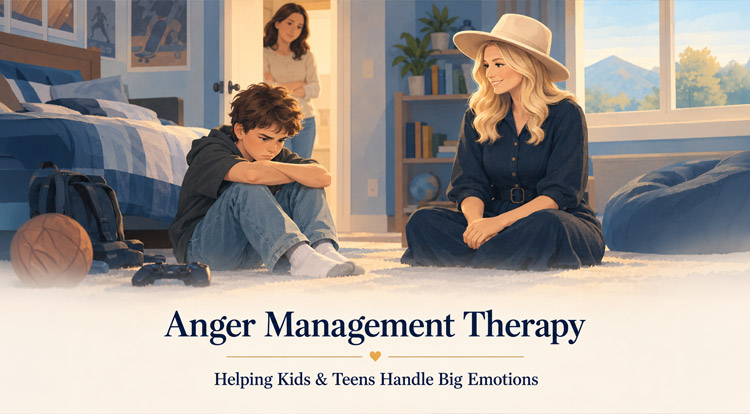
There is a kind of tiredness that comes from walking on eggshells in your own house. You know this feeling if you have lived through a slammed door,a thrown remote,the screaming match over something as small as turning off a video game. The kid who caused it is shaken, and so is everyone. Nobody really knows what to do next time.
Anger is a normal emotion, and children are still learning how to manage it. Anger management therapy is for families whose kids haven’t yet learned how to deal with their feelings.
At Raise Behavioral Health, anger management therapy can give children and families practical tools for handling difficult emotions. The goal is not to stop a child from ever feeling angry. Instead, therapy can help children recognize what they are feeling, understand their triggers, communicate more effectively, and learn healthier ways to respond.
What anger management therapy actually is
Anger management therapy isn't about stopping anger or teaching children to stay calm by force. Anger is an emotion that appears for a reason usually showing something else under the surface like frustration, fear, embarrassment or feeling ignored. Therapy helps a child see that reason early so they can deal with it before it takes over
In practice that means working with a therapist to create a set of tools: noticing the signs in the body, saying the feeling before it gets too strong and using a few strategies that really help when things start to get tough. For children this often happens through playing. For teenagers it looks like talking directly and trying out real situations, from their own life.
Why Kids & Teens Have Trouble With Anger in the First Place
Parents think their child's anger is a behavior problem. Sometimes it is not that complicated. A child’s brain is still learning how to control impulses. This growth takes time and doesn't finish until someone is in their twenties. When there is a change at home, a learning difference, anxiety or problems, at school anger comes out more easily. Anger is simpler to show than sadness or fear.
Something we often see in sessions is that anger rarely stands alone . It's frequently tangled up with anxiety, ADHD, a recent loss, or a family going through change like divorce or a move. Treating the anger without looking at what's feeding it usually doesn't hold up long term.
Signs a Child Might Benefit From Anger Management Therapy
Every kid loses their temper sometimes. It's usually worth a closer look when a pattern like this shows up:
-
Outbursts that feel bigger than what triggered them
-
Physical reactions: hitting, throwing things, breaking objects
-
Trouble calming back down even after the moment has passed
-
Anger interfering with friendships or school
-
The whole household adjusting around one person's moods
-
Regret or shame after outbursts, without knowing how to prevent the next one
If more than one of these sounds familiar, it doesn't mean something is wrong with your child. It usually just means they haven't been given the tools yet to manage what they're feeling.
What to Expect From Anger Management Therapy
There is no single approach that works for every child. That's why the first few sessions are often focused on understanding the child, the family, and the situations that lead to anger. From there, the therapist can develop a treatment plan based on the child's individual needs.
Depending on the child and situation, therapy may include:
-
Cognitive Behavioral Therapy (CBT): Helps children recognize thoughts and patterns that may contribute to anger and practice healthier responses.
-
Emotional regulation skills: Helps children recognize early signs of anger, such as a racing heart, clenched fists, or feeling tense, and use coping strategies before emotions become overwhelming.
-
Family sessions: Gives family members an opportunity to improve communication and work together on managing difficult situations.
-
Parent coaching: Helps parents and caregivers learn consistent strategies and language they can use at home.
-
Play-based approaches: Can help younger children express and work through emotions in ways that match their developmental level.
In some situations, medication may also be considered when anger is connected to an underlying mental health or behavioral concern. A qualified mental health professional can help families understand whether therapy, medication, or a combination of approaches may be appropriate.Progress also happens outside therapy sessions, as children and caregivers practice new skills in everyday situations.
How Long Does Anger Management Therapy Take?
It changes a lot from one family to another. Some children show improvement in just a few months, especially once everyone in the home starts speaking the same language. Others, especially when the anger comes from something like trauma or an ongoing family situation, take longer. Neither situation means something is wrong.It’s what that specific child needs.
Is Anger Management Therapy Only for Severe Cases?
Not at all. Families usually wait until things feel like a problem before asking for help, but therapy often works better when started sooner, before the situation becomes something the whole family gets used to.A child who gets upset often, gets angry quickly, or has trouble recovering after a moment can get just as much help as a child who has big outbursts.
You Are Not the Only Family Dealing With This
It's easy to feel like your household is uniquely chaotic when anger has become a regular visitor. It isn't. Most families who come in for anger management therapy leave surprised by how quickly things shift once everyone, not just the child, has a plan for the hard moments.
At Raise Behavioral Health, we work with kids and teens throughout Tempe and the surrounding Valley, building anger management plans around the actual child in front of us rather than a generic program. If outbursts have started to shape your household more than you'd like, reaching out is a reasonable next step, not a last resort.
FAQs:
1. What is anger management therapy?
It’s therapy that helps a child catch the early signs of anger and respond with coping tools instead of an outburst.
2. Why does my kid get angrier than the situation calls for?
A lot of the time, the anger is covering for something else: anxiety, embarrassment, feeling out of control, or frustration.
3. When should we look into this?
Sooner is usually easier than later. You don’t have to wait until things feel unmanageable;a pattern of frequent frustration is reason enough on its own.
4. How long does it take?
It depends on the child, family, and reasons behind the anger.Some families notice change in a couple of months, others need more time, and neither one is a red flag.
5. Can this help the whole family, not just the kid?
Yes, Family sessions and parent coaching can help caregivers understand what may be contributing to a child's anger and learn practical ways to respond. When everyone has consistent strategies for handling difficult moments, it can make it easier for the child and the family to manage challenges together.