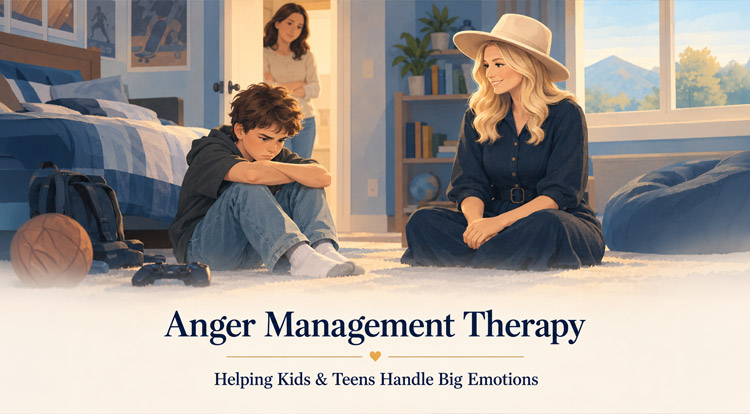

Every kid worries sometimes. Nervousness before a school presentation, nerves on the drive to the doctor’s office, an awkward first day with new classmates—none of that is cause for alarm. But when the worry sticks around day after day and starts crowding out normal life, that's usually when parents begin looking into the treatment of childhood anxiety.
It doesn't always show up loudly. Sometimes it's a kid who used to race out the door for soccer practice and now falls apart at drop-off. We hear versions of this often at Raise Behavioral Health, and the reassuring part is that anxiety usually responds well once a child gets the right support.
Why the Treatment of Childhood Anxiety Matters
This isn't about turning your kid into someone else.It’s about giving them words for feelings that currently feel too big to handle, plus some practical ways to work through them.
Kids rarely announce anxiety outright. It shows up sideways: a stomachache before school, sudden quietness, dodging certain situations, or a reaction that’s way out of proportion to whatever triggered it. Those moments deserve a closer look, not a lecture.
Nobody reads your kid better than you do. If your gut says something's off, that's usually reason enough to run it by someone who works with children professionally.
Common treatment of Childhood Anxiety Options:
There’s no single formula here. Anxiety shows up differently in every kid, so the plan has to as well. Most therapists spend those first few sessions just getting to know the child and the family before anything resembling a real plan takes shape.
That said, a handful of approaches tend to come up again and again:
-
Play therapy (especially for younger kids)
-
Family counseling
-
Relaxation and mindfulness techniques
-
Parent coaching (not just working with the child)
Medication is sometimes added for more severe symptoms, usually in consultation with a pediatrician or child psychiatrist, but therapy is typically where treatment begins.A good portion of progress happens outside of sessions, too—through listening without rushing to fix things and noticing wins along the way.
How Early Treatment options for Childhood Anxiety Helps Children
Children who begin treatment earlier tend to have an easier path ahead. They're usually better able to stay focused at school and get through the day without it feeling like a struggle.
Every family's situation is unique, so we avoid a one-size-fits-all solution.We start by sitting down with parents, then shape treatment around what that particular child actually needs.
Signs It May Be Time to Seek Help
A few patterns are worth watching for, especially if more than one shows up together:
-
Worrying almost every single day
-
Avoiding school or social situations
-
Frequent headaches or stomachaches with no medical cause
-
Trouble sleeping because of fear or worry
-
Getting overwhelmed easily by ordinary activities
None of this means something's wrong with your child. It usually just means they could use extra support while they figure out how to manage what they're feeling.
Many Families Face This at Some Point
Watching your kid struggle like this is hard, and it's easy to start feeling like your family is somehow the only one dealing with it.You’re far from alone. Given the right support, most kids pick up real coping skills and start feeling like themselves again, usually faster than parents expect going in.
If you're looking for care that's genuinely compassionate and actually built around your kid, not a generic program, Raise Behavioral Health works with families throughout Tempe and the surrounding Valley to put together a plan that fits.
FAQs:
1. What are the common signs of childhood anxiety?
Usually, it's excessive worrying, avoiding school or social situations, trouble sleeping, irritability, and physical complaints like stomachaches or headaches that tend to show up first.
2. What's the best treatment for it?
It really depends on the child, but evidence-based therapy Cognitive Behavioral Therapy in particular tends to work well for most kids.
3. How long does treatment take?
It varies a lot from kid to kid. Some start feeling better within a few months; others need support for longer, and that's completely normal.
4. How does Raise Behavioral Health support children with anxiety?
We use evidence-based therapy paired with care that brings in the whole family, not just the child, to help build real, lasting emotional resilience.
5. Why do families choose Raise Behavioral Health?
Mostly, it comes down to the team.Families notice the personalized plans and that we’re genuinely invested in helping kids thrive not just checking a box.